
Deck Staining vs Painting: Which Holds Up Better in New England?
· By Barreto Lima
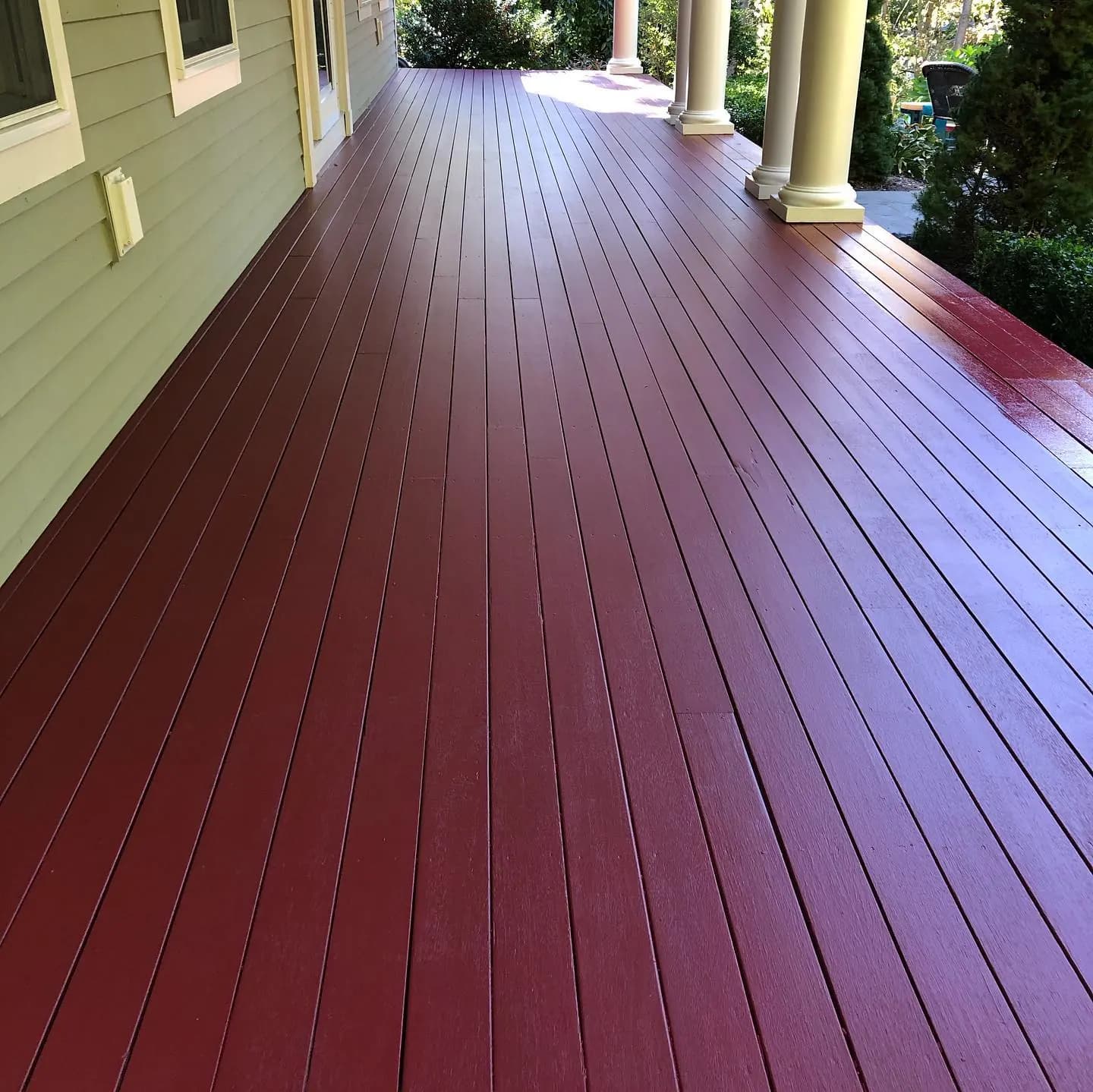
If your deck boards have gone gray, splintery or blotchy, you are probably weighing two options: stain it or paint it. Both protect the wood and both change how the deck looks, but they work in very different ways. In a climate like ours, with wet springs, humid summers, hard UV on south-facing decks and months of snow and freeze-thaw, that difference shows up fast.
This guide walks through how deck staining and deck painting actually behave on a Massachusetts deck, what each one costs to maintain over the years, and which situations favor one over the other. Whether your deck is in Andover, Boxford or Weston, the same basic rules apply, and a free estimate can confirm which finish your wood is ready for.
The core difference: penetrating vs film-forming
Stain is designed to soak into the wood. Transparent and semi-transparent stains leave the grain visible and protect from inside the top layer of the board. Because they do not form a thick skin, there is very little to peel. When a stain wears out, it fades and thins rather than flaking off in sheets.
Paint, and to a large degree solid-color stain, forms a film on top of the wood. That film hides the grain completely and gives you a uniform color, which is why painted porches have that classic New England look. The trade-off is that a film can trap moisture underneath. When water gets behind it through cracks, end grain or worn spots, the film lifts, bubbles and peels.
Solid stain sits in the middle. It behaves more like a thin paint, hides most of the grain, and can peel on horizontal surfaces, though usually less dramatically than a full paint system.
How New England weather treats each finish
Horizontal surfaces take the worst abuse on any house. Deck boards sit in standing water after rain, hold snow for weeks and get walked on with salty boots and shovels. Every freeze-thaw cycle pushes moisture in and out of the wood, and the boards swell and shrink with it.
Penetrating stains tend to handle that movement better because there is no rigid film to crack. The wood can breathe and dry out. You will see wear first in high-traffic paths and around steps, but the fix is usually a cleaning and a fresh coat rather than scraping.
Paint on a deck floor is more demanding. On a covered porch with good airflow and boards that stay mostly dry, porch and floor enamels can last well. On an open deck that takes direct snow load and full sun, paint often starts peeling in a few seasons, and once it peels, the repair means scraping and sanding before you can recoat. Railings, balusters and trim are vertical and shed water, so paint usually performs much better there than on the walking surface.
Maintenance and long-term cost
The real cost of a deck finish is not the first coat, it is the cycle that follows. As a rough guide, a semi-transparent stain on an open Massachusetts deck typically needs a maintenance coat every two to three years, and a solid stain often stretches to three to five years depending on sun and traffic. Paint on the walking surface can last longer in sheltered spots, but when it fails, prep takes much more labor.
For pricing, most homeowners in this region see professional deck staining land somewhere around a few dollars per square foot, with cleaning, light sanding and stain included. Painting is often similar or a bit higher because of the extra prep and primer. Railings, stairs, lattice and built-in benches add time, and a deck with peeling old coatings costs more to prepare than one that only needs a wash. Treat these numbers as general market ranges, not a quote. A free estimate based on your actual deck is the only reliable price.
One more cost factor: switching back is hard. Once a deck has been painted or coated with solid stain, going back to a transparent look usually means stripping the old film completely, which is slow and not always fully possible. Choosing the right system the first time saves money later.
When staining is the better choice
Stain usually wins on open decks that get direct weather, on pressure-treated pine that you want to keep looking like wood, and on cedar or mahogany where the grain is part of the appeal. It is also the safer choice if you prefer easy, predictable upkeep: clean, let dry, recoat.
Semi-transparent stain is a good middle ground for many homeowners because it adds color and evens out weathered boards without hiding the wood entirely. If the boards are in rough shape or mismatched after repairs, a solid stain can unify the look while still being more forgiving than paint.
When painting makes sense
Paint is a strong option for covered front porches, especially on older colonials and farmhouses where a painted porch floor in gray, green or barn red is part of the architecture. It also makes sense on railings, posts, skirting and trim, where a crisp painted finish can match the house and last longer than stain because water runs off.
A common and practical approach is a hybrid: stain on the deck boards and stair treads, paint on the railings and trim. You get a durable, low-hassle walking surface and the clean finished look on the vertical parts that people notice first.
If you do paint a walking surface, use a product rated for porch and floor use, make sure the wood is fully dry, and consider adding a non-slip additive. Wet painted boards can be slippery.
Prep matters more than the product
Most early finish failures trace back to prep, not to the can. Before any stain or paint goes down, the deck should be cleaned of dirt, mildew and loose fibers, and gray, sun-damaged wood should be brightened or sanded so the new finish can bond. Loose or peeling old coatings need to come off. Popped nails and loose boards should be fixed so they do not tear through the new coat.
Moisture is the other big variable. New pressure-treated lumber often needs time to dry before it accepts stain well, and any deck needs a few dry days after washing. Applying over damp wood is one of the fastest ways to get blotchy stain or peeling paint.
Timing your project in Massachusetts
Most deck finishes need moderate temperatures, low humidity and no rain for a day or two after application. In eastern Massachusetts, late spring and early fall usually offer the best stretches. Midsummer can work if the deck is shaded or the work is scheduled for cooler parts of the day, since direct heat can make stain flash dry and lap.
If your deck is due, it helps to book early. Exterior work fills up quickly once the weather turns, and a deck that goes into winter unprotected takes on more damage from snow and ice.
Frequently asked questions
- Is it better to stain or paint a deck in Massachusetts?
- For most open decks, a penetrating or semi-transparent stain holds up better because it does not peel when moisture moves through the wood. Paint works well on covered porches, railings and trim. Many homes use stain on the boards and paint on the railings.
- How often does a deck need to be restained?
- As a general guide, semi-transparent stain on an exposed deck typically needs a maintenance coat every two to three years, and solid stain often lasts three to five years. Sun exposure, shade, snow load and foot traffic all change the timeline.
- Can I stain over a painted deck?
- Not directly. A penetrating stain cannot soak through an existing paint film. The paint has to be stripped or sanded off first, or you can switch to a solid stain or paint that is compatible with the coating already there.
- How much does deck staining cost?
- Most homeowners see professional deck staining priced at a few dollars per square foot as a rough market range, with more for railings, stairs and decks that need heavy stripping. Blessed Partners & Paint Group gives a free estimate based on your actual deck.
- What is the best time of year to stain a deck?
- Late spring and early fall usually offer the best weather in eastern Massachusetts: mild temperatures, lower humidity and dry stretches. Avoid applying stain right before rain or on wood that is still damp.
Related services
Found this helpful? Make us a preferred source on Google.
Ready for an exact price?
Get a free, no-pressure in-home estimate. Real numbers for your home, not a phone guess.