
Drywall Repair Before Painting: What to Expect and Why It Matters
· By Barreto Lima
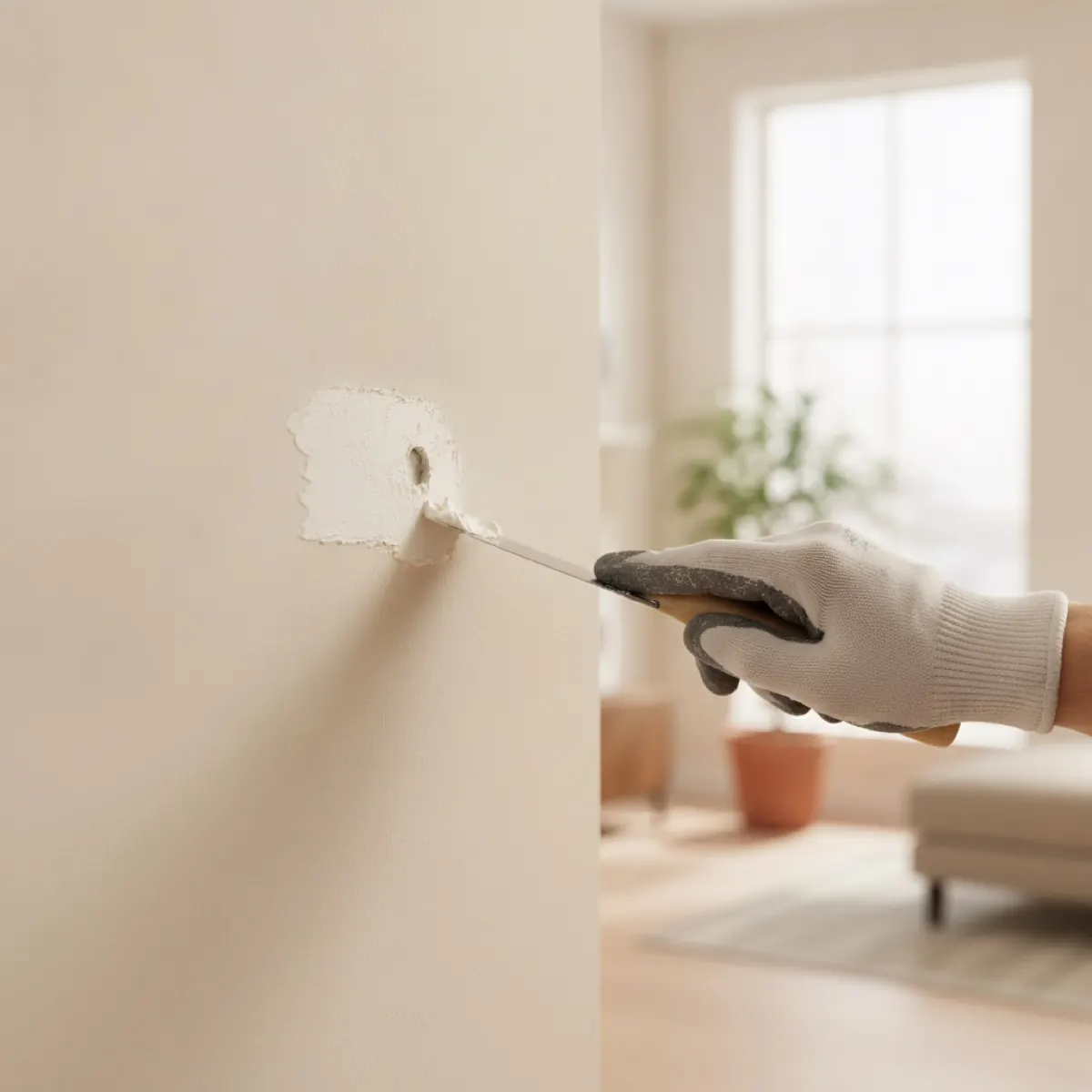
New paint does not hide damaged walls. It does the opposite. A fresh, even coat of color catches the light and makes every nail pop, hairline crack, dent and lumpy old patch easier to see. That is why drywall repair is the step that decides whether a paint job looks professional or just looks newer.
This guide explains what sheetrock repair before painting usually includes, how long it takes, what drives the cost and what you should expect from a painter who handles both. If you are planning interior painting anywhere north and west of Boston, from Andover to Watertown, knowing this ahead of time helps you compare estimates and plan the schedule around your household.
Why repair comes first
Paint is a thin film. It follows the surface underneath exactly, so any texture or damage in the wall telegraphs through. Flat and matte finishes are somewhat forgiving, but eggshell, satin and semi-gloss, which are common in kitchens, bathrooms, hallways and kids rooms because they clean easily, will highlight every flaw.
There is also a practical reason. Paint does not bond well to loose paper, crumbling compound or damp areas. Painting over those spots means the problem comes back, sometimes within months, as bubbles, cracks or peeling. Fixing the substrate first is what lets the new paint last.
Common drywall problems in Massachusetts homes
Homes across Essex and Middlesex counties range from older plaster houses to newer drywall construction, and each has its own patterns. In drywall homes, the usual list includes nail pops (fasteners that push the surface out as framing dries and shifts), stress cracks at the corners of doors and windows, dents and dings from furniture, holes from old anchors and TV mounts, and doorknob damage behind doors.
Seasonal movement plays a role here. Cold, dry winters and humid summers make framing expand and contract, which is why tape seams at ceilings and corners can crack and why nail pops tend to show up after the heating season.
Water damage is a separate category. Stains or soft spots under bathrooms, near windows or on ceilings below an attic should be investigated before anyone patches them. If the leak is still active, the repair will fail. Once the source is fixed and the area is dry, damaged board can be cut out and replaced, and stains get sealed with a stain-blocking primer so they do not bleed through.
Older homes with plaster walls often need different methods, such as reattaching loose plaster or bridging cracks with mesh, and a painter should tell you if a wall is plaster rather than drywall.
What the repair process looks like
Small repairs, like nail holes and minor dents, are filled with lightweight spackle or joint compound, allowed to dry, then sanded flush. Nail pops are usually reset with a screw next to the popped fastener, then covered and feathered out.
Cracks along seams are opened up slightly, retaped where the tape has failed, and covered with several thin coats of compound, each one wider than the last, so the patch blends into the surrounding wall. Larger holes get a patch of new drywall or a backing piece, then tape and multiple coats.
After sanding, patched areas are spot primed. This step matters more than most people think. Compound absorbs paint differently from the surrounding wall, and without primer you can see dull patches, called flashing, through the finish coat. On walls with textured surfaces, the texture also has to be matched so the repair does not stand out as a smooth spot.
How long it takes
Drywall repair is mostly drying time. Each coat of joint compound needs to dry before it can be sanded or recoated, and in a cool or humid house that can take longer than expected. Minor patches may be ready the same day with quick-setting compound, while seam repairs and larger patches usually need multiple coats spread over a day or more.
For a typical room with a handful of nail pops, a couple of cracks and some anchor holes, repairs can often be folded into the first day of a painting project. Bigger repairs, such as replacing a section of water-damaged ceiling, can add a day or two. A good estimate should tell you which repairs are included and how they fit into the schedule.
What drives the cost
When repairs are part of a painting project, small fixes like nail holes and minor dents are often included in the prep. Larger work is usually priced separately. As a rough guide, most homeowners see minor patching of a few small holes run from roughly one hundred to a few hundred dollars, while bigger repairs, multiple cracks, ceiling work or replacing a damaged section can reach several hundred dollars or more depending on size, access and texture matching.
Ceilings cost more than walls because of access and the difficulty of working overhead. High stairwell walls need ladders or staging. Textured surfaces take extra time to match. These are general market ranges, not a price list, and the only accurate number comes from someone seeing the walls. Blessed Partners & Paint Group includes the repair scope in a free estimate so you can see it next to the painting cost.
Doing it together with painting saves time and money
Hiring one crew for both drywall repair and painting avoids a common problem: the repair person leaves patches that are not quite flush, then the painter has to redo them or paint over visible flaws. When the same team owns both steps, the patching is done to the standard the final finish needs.
It also simplifies scheduling and cleanup. Furniture is moved and covered once, floors are protected once, and the dust from sanding is handled as part of the same project. Most professional crews sand with care and clean up afterward, but it is reasonable to ask how dust is controlled, especially if you have kids, pets or allergies.
Questions to ask before you hire
Ask whether minor patching is included in the painting price, and how larger repairs are priced. Ask whether patched areas will be primed before the finish coat. Ask how water-stained areas will be handled and whether stain-blocking primer is part of the plan. And ask what happens if more damage turns up once furniture is moved, so there are no surprises mid-project.
A clear, written estimate that lists the repair work room by room is the best way to compare painters fairly.
Frequently asked questions
- Should drywall be repaired before painting?
- Yes. Paint shows every dent, crack and nail pop, especially in eggshell or satin finishes. Repairing, sanding and spot priming first gives a smooth surface and helps the paint bond and last.
- How long does drywall repair take before I can paint?
- Small patches can be ready the same day with quick-setting compound. Seam repairs and larger patches typically need several coats with drying time between them, often a day or more, before priming and painting.
- Do I need to prime drywall patches?
- Yes. Joint compound absorbs paint differently from the rest of the wall. Without primer, patched areas often show as dull spots through the finish coat. Spot priming keeps the final color and sheen even.
- How much does sheetrock repair cost?
- As a rough market range, minor patching typically runs from about one hundred to a few hundred dollars, while larger repairs or ceiling work can cost more. Blessed Partners & Paint Group includes repair scope in a free estimate.
- Can you paint over a water stain on drywall?
- Only after the leak is fixed and the area is completely dry. Damaged or soft board should be replaced, and the stain should be sealed with a stain-blocking primer so it does not bleed through the new paint.
Related services
Found this helpful? Make us a preferred source on Google.
Ready for an exact price?
Get a free, no-pressure in-home estimate. Real numbers for your home, not a phone guess.