
House Painting in Bedford, MA: Ranches, Colonials and Wooded Lots
· By Barreto Lima
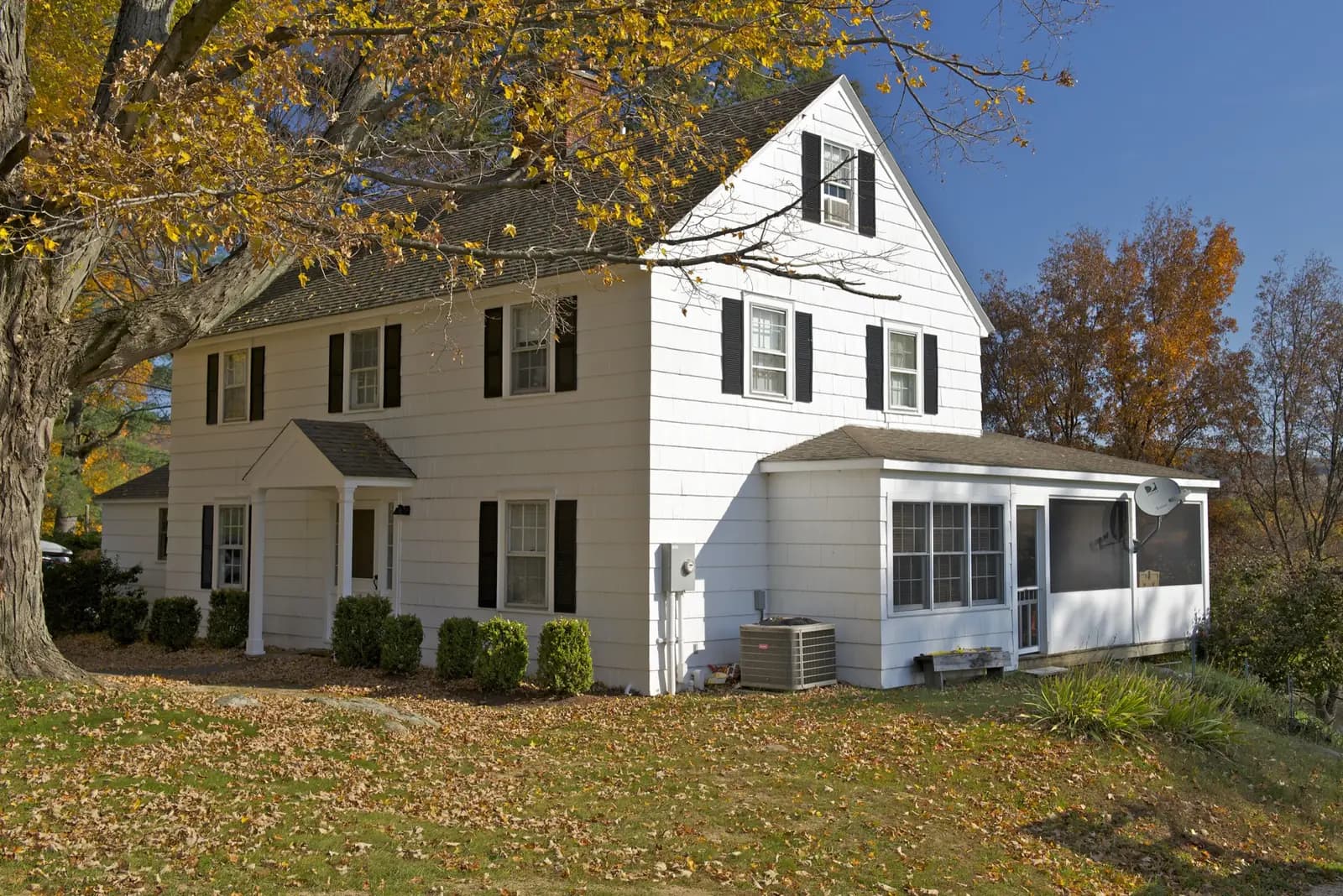
Bedford is a town of trees and mid-century neighborhoods with a historic heart. The Common and Great Road carry the town's older houses, while most streets elsewhere were built out in the decades after World War II with ranches, Capes, split-levels and garrison Colonials on wooded lots. Each of those settings asks something a little different from a paint job.
This guide is for Bedford homeowners planning a project: how to refresh a mid-century exterior, what older homes near the center need, how shade and moisture affect paint, what to do about decks, how to approach interior updates and when to schedule the work. If you want a second opinion on your own house, Blessed Partners & Paint Group starts every project with a free estimate.
Refreshing a mid-century Bedford exterior
Ranches and split-levels from the 1950s through the 1970s usually have long, low elevations with wide fascia boards, deep overhangs and a big garage door that dominates the front. The siding might be painted wood clapboard, stained shingles, vertical boards or vinyl, often with a section of brick or stone near the entry.
On these homes, the trim and fascia tend to fail first. Gutters overflow, water runs behind the fascia and paint lifts at the corners. Before painting, those boards should be checked for soft spots and repaired, then scraped, primed and caulked. Garage doors, front doors and shutters make a big visual difference for relatively little surface area.
If the siding was stained rather than painted, think carefully before switching to paint. Solid stain is easier to maintain on rough-sawn or shingled surfaces, while paint gives a crisper look on smooth clapboard. Changing from one to the other can work, but it needs the right primer and prep.
Capes and garrison Colonials: dormers and second-story trim
Capes bring dormers, steep roof lines and window trim that is hard to reach, and garrison Colonials have an overhanging second floor with a long horizontal trim line where water likes to sit. Both styles have more high work than a ranch, so access and safety planning are a real part of the scope.
Color choices on these homes often lean traditional: white, gray, soft blue, pale yellow or a deep red, with white trim and black or dark green shutters. A classic front door color can update the whole house without changing the body color at all.
Older homes near the Common and along Great Road
Bedford's historic center has houses that are far older than the subdivisions around them. These usually have wood clapboard with many layers of paint, multi-pane windows, corner boards and cornices with plenty of joints for water to enter. Rushing the prep on a house like this tends to show within a couple of years.
The right approach is to remove loose and failing paint, sand edges smooth, spot prime bare wood, replace rotted trim with matching profiles and caulk open seams before finish coats. Window sills and the bottom courses of siding deserve extra attention because they hold water longest.
Bedford has a local historic district around its center, and properties inside it may need review for some exterior changes. If your home is in or near the center, check with the Town of Bedford before changing colors or replacing trim details.
Shade, mildew and the wooded lot problem
Mature trees are part of what makes Bedford feel the way it does, but they are hard on exterior paint. Shaded walls stay damp after rain and dew, mildew grows on north-facing siding and trim, and pollen, sap and leaves settle onto every horizontal surface.
Painting over mildew does not solve it. The surface should be washed and treated with a mildew cleaner, rinsed and allowed to dry fully before primer goes on. Trimming back branches that touch the house and keeping gutters clear also helps a new paint job last longer.
Homes in lower areas near the Concord River or the Shawsheen River can see moisture linger even longer after storms and snowmelt. On those houses, checking the bottom edge of siding, sill plates and door thresholds is part of a good estimate.
Decks and fences in Bedford backyards
Many Bedford homes have a wood deck off the kitchen or family room, often under tree cover. Decks like that get leaves, standing water and very little drying sun, which breaks down stain faster than on an open, sunny deck.
A good deck project starts with cleaning, replacing any soft boards and letting the wood dry thoroughly. A penetrating stain soaks into the wood and wears gradually, while a solid stain or paint gives more color coverage but can peel if moisture gets underneath. The right choice depends on the age of the wood and how much upkeep you want to do.
Interior updates for mid-century layouts
Inside, mid-century Bedford homes often have smaller rooms, wood paneling in a den or basement, original oak or painted kitchen cabinets and ceilings with years of patches. Common updates include lighter, warmer wall colors to brighten rooms under a tree canopy, painting over paneling with the right primer, refreshing trim and doors and painting kitchen cabinets instead of replacing them.
Drywall repair is usually part of the job. Nail pops, settling cracks and old anchor holes add up over decades, and fixing them before painting makes a fresh color look clean instead of highlighting every flaw.
Timing, lead paint and what to ask a painter
Exterior work in Bedford is usually best from late spring into early fall, when surfaces are dry and nights stay warm enough for paint to cure. Interior painting can be scheduled year-round. Homes built before 1978 may have lead in older layers, and federal EPA rules and the Massachusetts Lead Law set specific practices for disturbing those surfaces, so ask any painter how they handle containment and cleanup.
When comparing estimates, look for a clear list of surfaces, the prep planned for each, the primer and paint categories, the number of coats and how your floors, furniture and landscaping will be protected. Also ask how hidden repairs are handled once work begins.
Blessed Partners & Paint Group is based in Andover and serves Bedford along with neighboring towns such as Concord, Lexington and Burlington. Services include interior and exterior painting, cabinet painting, drywall repair, deck and fence staining and commercial painting. Call or text (781) 420-3172 to set up a free estimate.
Frequently asked questions
- How do I know if my Bedford home needs exterior painting?
- Common signs are peeling or cracking paint, chalky residue when you rub the siding, open caulk joints, mildew that keeps coming back and soft wood at sills or fascia. Catching these early usually means less repair work.
- Can mildew be removed before painting?
- Yes. Mildew should be washed and treated, rinsed and allowed to dry before priming. Painting over it without treatment usually lets it return through the new finish.
- Is it better to stain or paint siding on a Bedford ranch?
- It depends on the siding. Solid stain often works well on shingles and rough-sawn boards, while paint gives a crisper finish on smooth clapboard. Switching from one to the other is possible with the right prep and primer.
- How much does house painting in Bedford cost?
- Cost depends on the size and style of the home, the condition of the surfaces, the amount of repair, how much high work is involved and the number of colors. A free estimate on your house is the most reliable way to know.
Related services
Serving
Found this helpful? Make us a preferred source on Google.
Ready for an exact price?
Get a free, no-pressure in-home estimate. Real numbers for your home, not a phone guess.