
Painting a House in Boxford, MA: A Guide for Wooded Lots and Village Homes
· By Barreto Lima
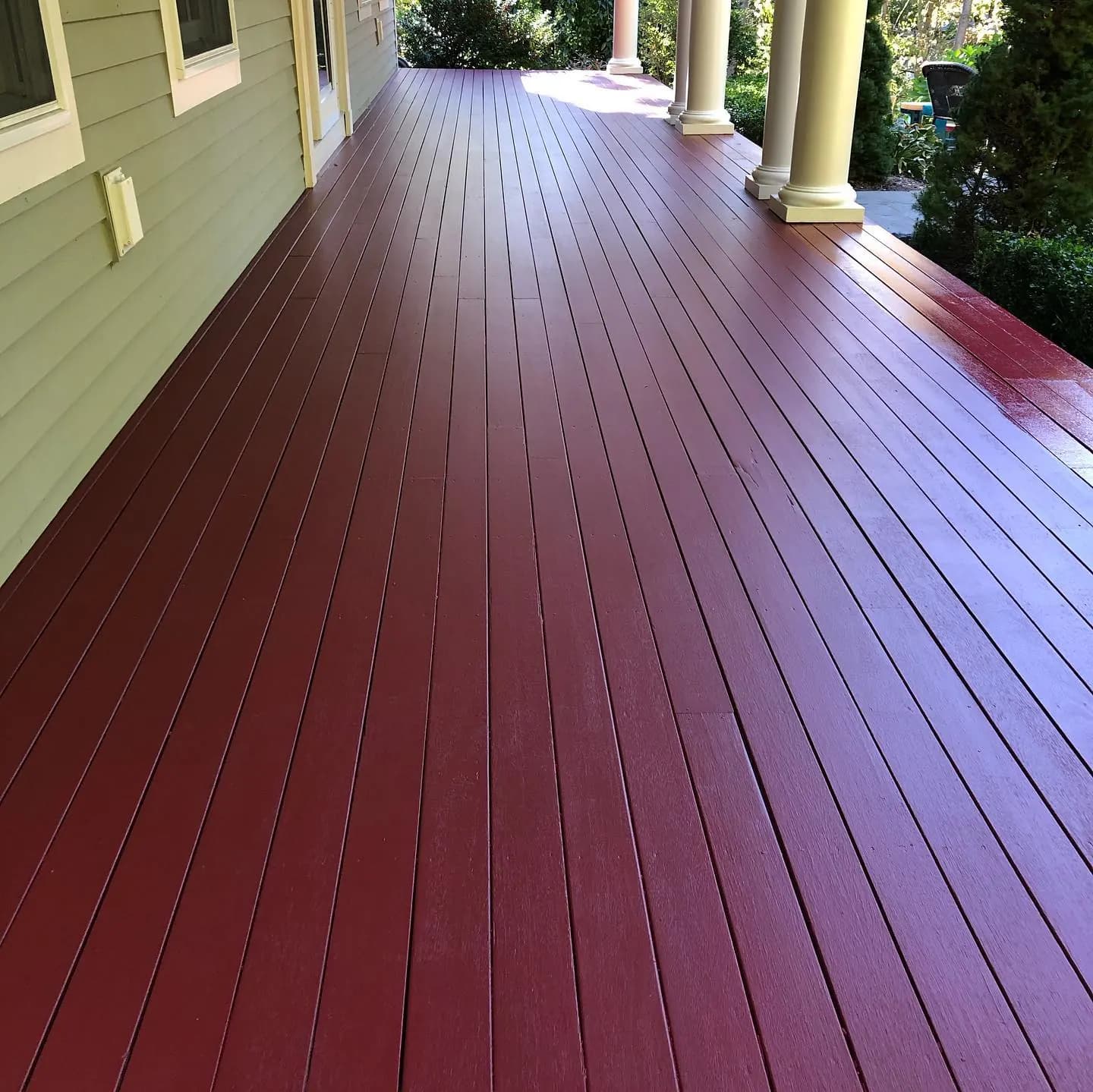
Boxford is a town of big lots and tall trees. Houses sit back from the road behind stone walls, fields and stands of oak and pine, and the two old village centers, Boxford Village and West Boxford, keep a rural New England feel. It is also a place where paint has to work hard.
Shade, moisture, long winters and large wood surfaces such as decks, porches and barns all affect how long a paint job lasts. This guide covers the questions Boxford homeowners usually have before a project: how the setting changes the prep, when to schedule exterior work, how to handle decks and outbuildings, what to know about older homes and how to compare estimates. If you would like someone to look at your own property, Blessed Partners & Paint Group offers a free estimate on every project.
Why a wooded lot changes the paint plan
On an open suburban street, every side of a house dries within a few hours after rain. On a Boxford lot surrounded by trees, some walls may stay damp until the afternoon, and a few may barely see direct sun at all. That constant moisture is what feeds mildew, algae and the gray or green film that shows up on siding and trim.
Painting over that film is a common mistake. New paint applied on top of mildew can trap it, and the growth often comes back through the finish within a season or two. The right sequence is to wash the siding, treat any mildew, rinse thoroughly and let the surface dry before scraping, priming and painting.
Trees also drop leaves, needles and seed pods into gutters. When gutters overflow, water runs down the face of the wall or splashes back from the ground, soaking the lowest clapboards and the bottom of corner boards. If paint keeps failing low on one side of the house, look up at the gutter before blaming the paint.
Village homes versus newer houses
Boxford's older homes, many of them in or near the two village centers, tend to be farmhouses and colonials with wood clapboard, simple trim and sometimes an attached ell or barn. These houses often have many layers of paint. Where those layers have built up and cracked, careful scraping and sanding are needed so the new coat bonds to a sound surface and the edges of old paint do not show through.
Homes built from the 1960s onward cover a wide range: garrison colonials, capes, contemporaries with vertical boards and large homes from more recent decades. Many use cedar shingles or stained siding, and some mix painted trim with natural wood. On those houses, the first decision is often whether a surface should be painted or stained, and the answer can differ from one part of the house to another.
Whatever the age, take a slow walk around your house with a notepad before calling anyone. Note peeling areas, soft wood, open caulk joints, mildew and anything you want included, like a shed, a fence or a barn door. It makes the estimate more useful and helps you compare painters on the same scope.
Decks, porches and outbuildings
Many Boxford homes have large decks facing the woods, and those decks take a lot of abuse from leaf litter, shade and snow. Stain and paint behave very differently on a deck. A penetrating stain soaks into the wood and wears gradually, so it is easier to renew, and it lets moisture escape from shaded boards. A solid paint or solid stain gives more color coverage but forms a film that can peel on walking surfaces if moisture gets underneath.
For decks under heavy tree cover, a breathable, penetrating stain is often the more forgiving choice. Painted porches can look wonderful on a farmhouse, but they need sound wood and periodic touch-ups on stairs and the paths people walk most. Whatever the finish, the deck should be cleaned and allowed to dry thoroughly first.
Barns, sheds and fences are worth planning at the same time as the house. Combining them into one project keeps colors consistent across the property.
When to paint in Boxford
Exterior painting in northern Essex County usually runs from late spring to early fall. Most exterior coatings need air and surface temperatures above a minimum, often near 50 degrees, while they cure, and they should not be applied when rain or heavy dew is likely within a few hours. Product labels list the exact limits, and some formulas allow cooler application.
On shaded properties, the practical window is a little narrower. Walls that stay damp in the morning need time to dry before paint goes on, so work often starts later in the day on those sides. Spring can bring long wet spells, and late fall brings cold nights that slow curing. Many homeowners find that summer and early fall offer the steadiest conditions.
Interior painting, cabinet painting and drywall repair can happen in any season, so it often makes sense to plan inside work for winter and exterior work for the warm months.
Lead paint and older Boxford homes
Lead-based paint was banned for residential use in 1978, and many homes in Boxford's villages are far older than that. Intact lead paint is usually not a hazard by itself, but scraping, sanding or removing it releases dust and chips that are dangerous, especially for young children and pregnant women.
Federal EPA rules require contractors who disturb painted surfaces in pre-1978 homes to follow lead-safe work practices, and Massachusetts has its own Lead Law with additional requirements when children under six live in the home. If your house is older, ask any painter how they handle containment, cleanup and disposal, and review current guidance from the Massachusetts Department of Public Health.
Comparing painting estimates
A useful estimate is specific about scope. It should list which surfaces are included, how they will be prepared, how many coats are planned and what category of primer and paint will be used, such as acrylic latex for siding or a harder finish for trim and doors. It should also explain how plantings, walkways and decks will be protected.
As a rough guide, painting projects in this part of Massachusetts vary widely, and most homeowners see the biggest differences come from the size of the house, the amount of prep and repair and how many colors are involved. A large older home on a shaded lot with lots of trim will usually cost more than a newer house with simple siding, so the only reliable number is one based on your actual property.
Blessed Partners & Paint Group is based in nearby Andover and offers exterior and interior painting, cabinet painting, drywall repair and deck and fence staining for Boxford homes. To talk through your project, call or text (781) 420-3172 and set up a free estimate.
Frequently asked questions
- How often does a Boxford house need exterior painting?
- It varies with shade, siding type and the quality of the last job. Painted wood in New England often needs attention every several years, and heavily shaded or very sunny walls usually wear first. Peeling, mildew and open caulk joints are the signs to watch.
- Can mildew just be painted over?
- It should not be. Mildew needs to be cleaned and treated, then rinsed and allowed to dry before priming and painting. Otherwise it tends to come back through the new finish.
- Is stain or paint better for a shaded deck?
- A penetrating stain is often the more forgiving choice for decks under trees, because it lets moisture escape and wears gradually. Paint can work on sound wood but usually needs more frequent touch-ups on walking areas.
- How much does house painting in Boxford cost?
- Cost depends on the size of the home, the condition of the surfaces, the prep and repair needed and the number of colors. A free estimate based on your house is the most reliable way to know.
Related services
Serving
Found this helpful? Make us a preferred source on Google.
Ready for an exact price?
Get a free, no-pressure in-home estimate. Real numbers for your home, not a phone guess.