
Repainting Kitchen Cabinets: Typical Cost and the Process That Makes It Last
· By Barreto Lima
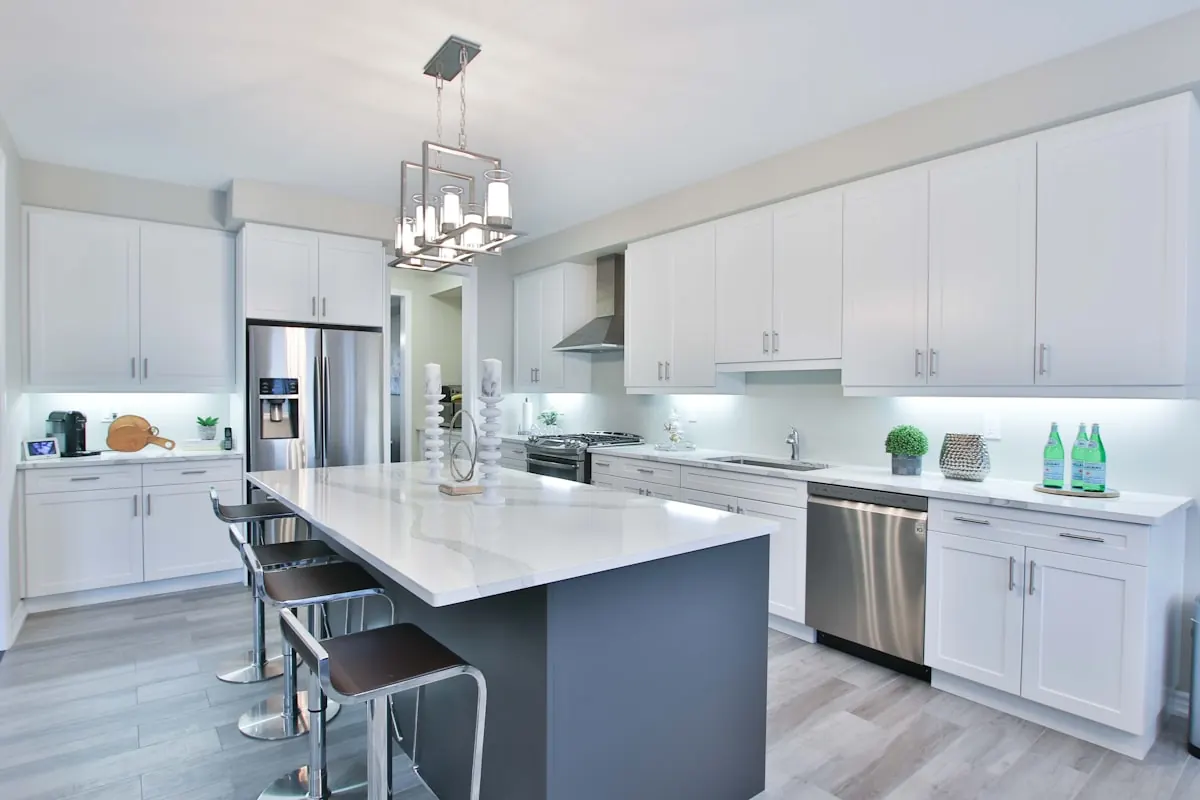
Kitchen cabinets take more abuse than almost any other painted surface in a home. They get opened dozens of times a day, splashed with water and grease, and bumped by pots, chairs and kids. That is why repainting kitchen cabinets is a very different job from painting a wall, and why the process matters as much as the color you pick.
If your cabinet boxes are solid but the finish looks dated, painting can give the kitchen a completely new look for a fraction of the cost of new cabinetry. This guide covers typical cabinet painting cost ranges, the steps a careful job includes, and how to decide whether painting is the right choice for your kitchen. The figures are rough market guides; Blessed Partners & Paint Group offers a free estimate for an exact number.
Typical cabinet painting cost
As a rough guide, many homeowners in Massachusetts see professional cabinet painting quotes in the range of about $3,000 to $8,000 for an average kitchen, with small kitchens toward the lower end and large kitchens with islands, tall pantry units and lots of doors toward the upper end. Very large or highly detailed kitchens can cost more.
Painters often price cabinets by the door and drawer front, because each piece needs to be cleaned, sanded, primed and coated on both sides. Across the market, per-piece pricing commonly falls somewhere between about $75 and $200, with the cabinet boxes, end panels and trim factored in separately or built into the total.
Those numbers move with the size of the kitchen, the condition of the existing finish, the type of wood or material, and whether the color change is dramatic. A detailed free estimate based on your actual cabinets is the only reliable way to budget.
What changes the price
The number of doors and drawers is the biggest factor. Two kitchens with the same footprint can have very different counts, and every extra piece adds labor. Raised-panel or shaker doors take longer to sand and coat than flat slab doors because of all the edges and recesses.
Material matters too. Solid wood cabinets, especially oak with its open grain, may need grain filling if you want a smooth modern look instead of visible texture. Laminate, thermofoil and some factory finishes need special bonding primers, and some surfaces are not good candidates for paint at all.
Condition is the third factor. Years of cooking grease near the stove, water damage under the sink, or peeling from a previous paint job all mean more cleaning and repair before any primer goes on. Adding an island, a new color on the lower cabinets only, or interior shelves also adjusts the price.
The cabinet painting process, step by step
A durable cabinet finish starts with taking things apart. Doors and drawer fronts are removed, hardware is taken off, and each piece is labeled so it goes back in the right place. The kitchen itself is protected with plastic and paper over counters, floors and appliances.
Next comes degreasing. Kitchen cabinets carry a film of cooking oil that you often cannot see, and paint will not bond to it. A thorough clean with a degreaser is one of the most important steps in the whole job. After that, surfaces are sanded to dull the old finish so primer can grip, and dents or gouges are filled.
Then a bonding primer goes on, followed by sanding between coats and typically two finish coats of a hard, cabinet-grade enamel or urethane-modified paint. Many painters spray the doors and drawer fronts for a smooth, brush-free look and brush or roll the cabinet boxes in place. Once cured, hardware goes back on and the doors are rehung and adjusted.
The whole process usually takes several days to a couple of weeks depending on the size of the kitchen and drying and curing time, so plan for some disruption to your kitchen routine.
Why the product and cure time matter
Regular wall paint is not designed for cabinets. It stays soft, sticks to itself and scuffs easily. Cabinet work calls for coatings made to level out smooth and cure hard, such as waterborne alkyd enamels or similar products designed for trim and cabinetry.
Even the best cabinet paint needs time to fully cure, often a few weeks after it feels dry to the touch. During that window, treat the doors gently: avoid hanging wet towels over them, use the handles and wipe spills with a soft cloth. That patience pays off in a finish that holds up to daily use.
Sheen is a matter of taste and practicality. Satin and semi-gloss are popular because they are easy to wipe clean, while a lower sheen hides small surface imperfections better.
Painting vs. refacing vs. replacing
Painting makes the most sense when your cabinet boxes are sturdy, the layout works for you, and you mainly want a new color or a brighter kitchen. It is typically the most budget-friendly of the three options and keeps your countertops and plumbing undisturbed.
Refacing, which means new doors and drawer fronts with veneer over the boxes, costs more but lets you change the door style. Full replacement is the most expensive and makes sense when the boxes are damaged, the layout needs to change or you are already planning new counters.
For many kitchens in older Andover, North Andover and Boxford homes, the original wood cabinets are solidly built, which makes them excellent candidates for paint.
Planning your cabinet project
Choose your color early and look at samples in your own kitchen light, morning and evening. White and off-white are classic, while greens, blues and deep grays are common choices for islands or lower cabinets in a two-tone look.
Decide whether you want new hardware. Changing knobs or pulls at the same time is easy while the doors are off, but if the new hardware has a different hole spacing, the old holes need to be filled before painting.
Finally, think about timing. Many homeowners schedule cabinet painting around a trip or a period when they can eat out more often, since the kitchen will be partly out of commission.
Get a free cabinet painting estimate
Every kitchen is different, and the most accurate price comes from someone looking at your doors, the existing finish and the overall condition in person. Blessed Partners & Paint Group is based in Andover and paints cabinets in homes north and west of Boston.
Call or text (781) 420-3172 to set up a free estimate, or read more about our cabinet painting service.
Frequently asked questions
- How much does it cost to paint kitchen cabinets?
- As a rough guide, professional cabinet painting for an average Massachusetts kitchen often falls between about $3,000 and $8,000, depending on the number of doors and drawers, door style, material and condition. A free estimate gives you an exact price.
- How long does painted cabinetry last?
- With proper degreasing, sanding, a bonding primer and a cabinet-grade finish, painted cabinets can look good for many years. High-touch spots near handles and the sink may need occasional touch-ups over time.
- Can laminate or thermofoil cabinets be painted?
- Some can, with the right bonding primer and careful prep, but results vary. Thermofoil that is peeling or bubbling is usually not a good candidate. A painter should look at the cabinets in person before recommending paint.
- Will I be able to use my kitchen during cabinet painting?
- Partly. The cabinet boxes and counters are covered while work is underway and doors are often away for coating, so plan on limited use for the duration of the project and gentle use while the finish cures.
- Is painting cheaper than replacing cabinets?
- In most cases, yes. Painting typically costs a small fraction of new cabinets and keeps your countertops and plumbing in place, as long as the existing boxes are in good condition.
Related services
Found this helpful? Make us a preferred source on Google.
Ready for an exact price?
Get a free, no-pressure in-home estimate. Real numbers for your home, not a phone guess.